
Is your humidifier becoming a mold trap?

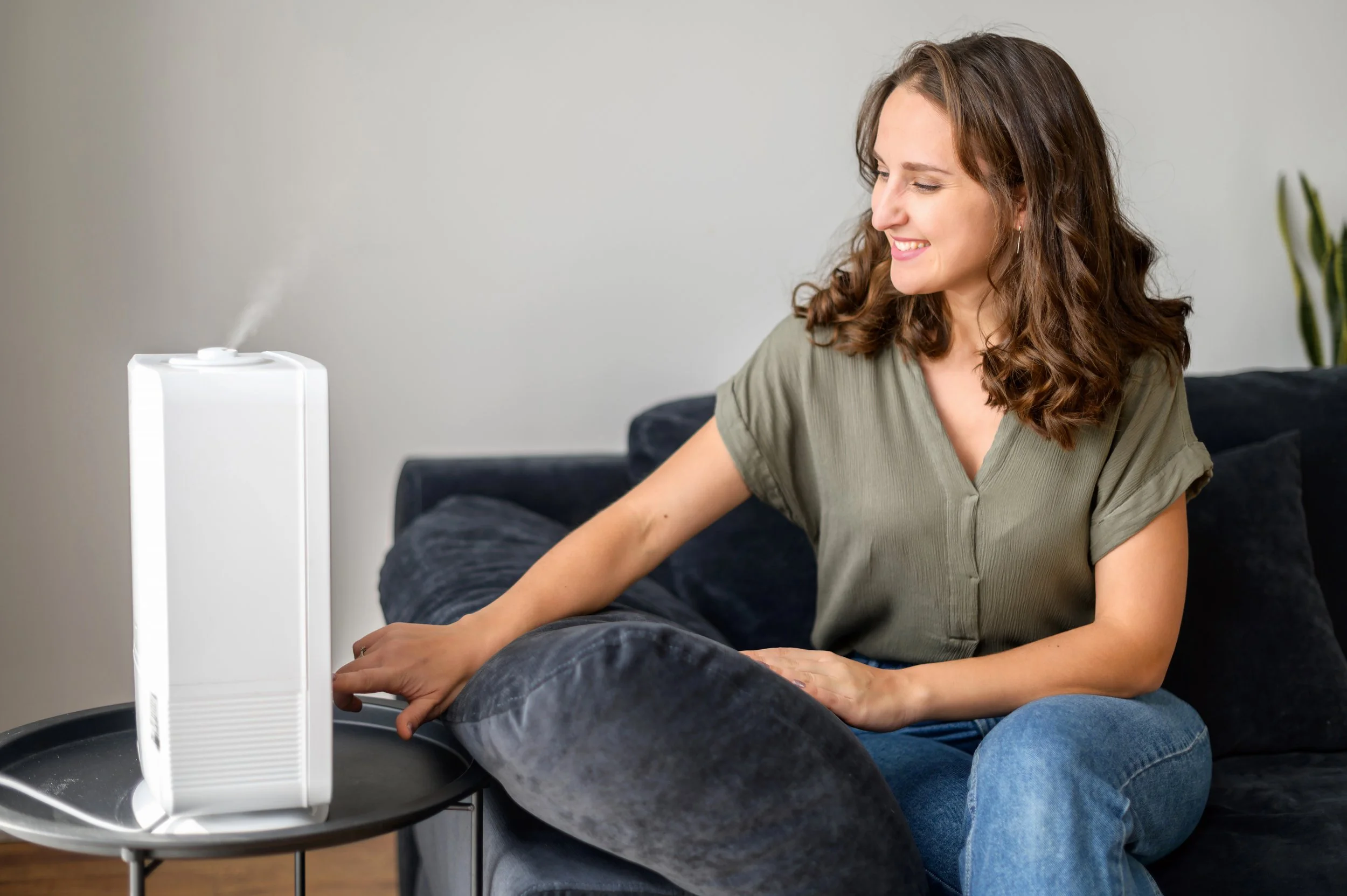
Portable humidifiers require frequent maintenance to prevent mold spores and microbial growth on the internal surfaces.
Humidity Levels Can Make or Break Your Indoor Air Quality
Your home humidity levels are crucial in not only maintaining peak indoor air quality (IAQ) conditions, but also your own physical health. IAQ professionals recommend investing in either portable or whole home humidifiers.
Regular maintenance is essential. Left unchecked, humidifiers can quickly become the unfortunate source of mold spores, fungi, and microbes that have an unhealthy impact on you and your indoor environment.
Maintaining Portable Humidifiers
Portable humidifiers require frequent maintenance to ensure there will be no microbial growth on the internal surfaces.
The U.S. EPA recommends:
Care for your humidifiers daily. Empty the water tank, wipe all surfaces dry and refill the water tank. (U.S. EPA)
Deep clean humidifiers every three days.
Empty the water tank, clean the tank with a brush or scrubber, wipe the surfaces dry and refill the water tank (U.S. EPA)
Without proper care, your portable humidifier can gradually become your worst enemy. Don’t allow your humidifier to become a mold source.
Maintaining Whole Home Humidifiers
Read your owner’s manual, even if that’s the only thing you do! Maintenance will vary for each household. Consult an HVAC professional for maintenance on whole home humidifiers.
Maintain the Relative Humidity Sweet Spot
The goal is to aim for a humidity range that supports home comfort and your physical health without potential mold growth.
The EPA recommends keeping indoor humidity between 30% and 50% (U.S. EPA).
Other professionals recommend maintaining relative humidity within the “goldilocks zone” which is between 40% and 60% (Wolkoff).
Be Aware of Your Humidity Levels
If your humidifier doesn’t have a built-in humidity meter, use a hygrometer (your relative humidity reader friend).
Do not rely solely on how you are feeling physically – this may give you a false sense of low humidity levels in your environment.
Use the Right Type of Water in Your Humidifier
The EPA recommends using distilled or low-mineral water to reduce any buildup in the water tank of your humidifier.
Maintain a Regular Humidifier Cleaning Routine
Follow the daily cleaning and every third-day deep cleaning routine mentioned earlier.
Placement of Your Humidifier
Keep your humidifier away from walls, curtains and upholstered furniture that could create unnecessary moisture, condensation buildup, and future mold spores in your environment.
Don’t Experiment with Additives in Your Humidifier
Although it may be tempting to add essential oils, disinfectants or other additives to your water tank, your humidifier was not designed for that.
Your humidifier can aerosolize your water tank contents, thus putting you in danger of inhaling irritants.
Call (816) 598-4111 or visit EcoSafeKC to learn more!

©2026 EcoSafe Environmental Services, Inc. | Kansas City, MO 64106 | (816) 598-4111